For decades, the aviation and drone industries have looked to nature for inspiration. While engineers once focused primarily on developing more powerful engines and lighter materials, attention has increasingly shifted towards how animals move through the air. Birds, insects and even gliding mammals use solutions from which modern technology still has much to learn.
Nature as a Design Laboratory
In nature, flight is the result of millions of years of evolution. Animals have adapted to widely varying environments, from dense forests and open plains to strong winds and turbulent air currents. As a result, they possess highly efficient mechanisms for stability, navigation and manoeuvrability. For researchers, these characteristics provide a valuable knowledge base for developing next-generation drones and aircraft.
This approach is increasingly known as biomimicry: the application of principles found in nature to technological innovation. Within the aviation industry, biomimicry is leading to remarkable new insights.
Learning from the Flying Squirrel
When people think of flying animals, birds usually come to mind first. Yet gliding mammals also offer valuable lessons. Flying squirrels control their movement not only with a wing-like membrane but with their entire bodies. By continuously adjusting their posture, they can glide with exceptional precision through complex environments.
Researchers have translated this ability into experimental drones whose entire bodies, not just their wings, can change shape during flight. This enables aircraft to adapt more effectively to changing conditions. Such an approach offers advantages in manoeuvrability, stability and precision, particularly in environments where conventional drones struggle to navigate safely.
This development suggests that the future of flight may not lie in increasingly rigid structures, but rather in flexible systems that can adapt to their surroundings.
The Navigation Skills of the Honeybee
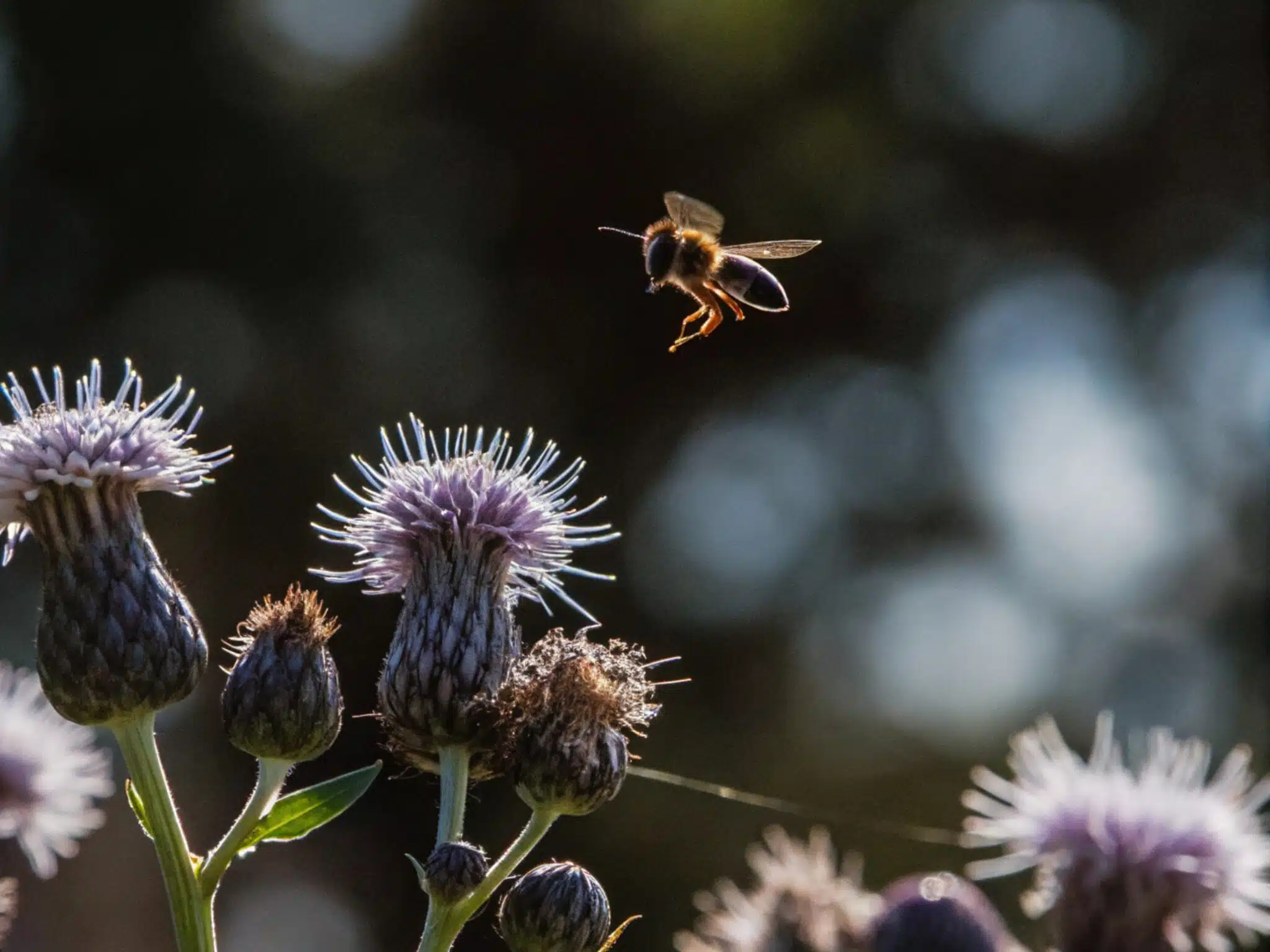
Researchers are inspired not only by the physical movements of animals but also by the way they navigate. Honeybees possess remarkably small brains, yet they are capable of travelling long distances and returning to their hive with impressive accuracy.
This ability is especially interesting for drone technology. Modern navigation systems often rely on complex maps, powerful processors and vast amounts of data, all of which require significant computing power and energy. Honeybees, however, demonstrate that effective navigation can be achieved much more efficiently.
By studying how insects combine visual recognition with distance estimation, scientists are developing new navigation systems that allow drones to operate autonomously without heavy onboard computers. This is particularly promising for small drones. Less hardware means lower weight, reduced energy consumption and greater operational efficiency.
Stability Inspired by the Kestrel
Another major challenge for aircraft is coping with turbulence. Gusts of wind and unpredictable air currents can significantly affect the stability of both aircraft and drones. Birds of prey, however, appear to handle these conditions with remarkable ease.
The kestrel exemplifies this. It can hover almost motionlessly in the air while environmental conditions constantly change. It achieves this by making continuous, subtle adjustments to its wings, tail and body in response to the surrounding airflow.
Researchers are analysing these movements in detail. The knowledge gained is helping to develop intelligent flight-control systems and flexible wing structures that respond more effectively to turbulence. As a result, future drones will be able to operate more safely, while aircraft will be better equipped to cope with changing weather conditions.
From Nature to Technology
Although a drone is not a bird and an aircraft is not an insect, the parallels between biology and engineering are becoming increasingly evident. Flying squirrels teach engineers how flexibility can improve flight performance. Honeybees demonstrate that effective navigation does not necessarily require enormous computing power. Kestrels show how stability can be maintained even under challenging conditions.
Together, these examples illustrate that nature is not merely a source of inspiration but also a practical guide for future innovation. As researchers continue to deepen their understanding of biological principles, drones and aircraft are likely to acquire more and more characteristics that currently exist only in the animal kingdom.
As a result, tomorrow’s aviation industry will become not only smarter and more efficient but also considerably more natural. And the engineering and interconnection industry is following these developments closely.